
Skip to content

Four small games that respect your evening

Premium puzzle and indie titles on Android — no timers, no daily rewards, no notifications asking you to come back. Written from Adelaide, one game at a time.

The idea

Games you finish, then think about

Most mobile games are designed to be endless. These four are designed to be finished — or, in one case, to be replayed because each run is genuinely different rather than because a calendar told you to log in. Everything here is paid up front, which is the trade: you buy a game instead of being sold to inside one.

This site is one person's notebook. There is no sponsorship, no affiliate arrangement and no early access. Store buttons go to official Google Play listings, where price and terms are shown before you commit to anything.

Four games

Short, deliberate, worth the money

Two are quiet puzzle boxes, one is a wordless platformer, one is a card game with a thousand endings. What they share is that none of them wants your attention every day.

Monument Valley — a pastel isometric tower with impossible staircases

Monument Valley

Our score 4.7 / 5

Ten short chapters of impossible architecture, and still the clearest argument that a phone game can be a designed object rather than a service. Every level is a single idea, stated once, and then the game moves on before the idea wears out.

It is deliberately short. That is the point: it ends while you still want more, which almost nothing else on a phone does. Play it in two sittings with the sound on.

  • Around 90 minutes
  • No timers
  • Premium

This is a paid title. The current price for your account is shown on the store page.
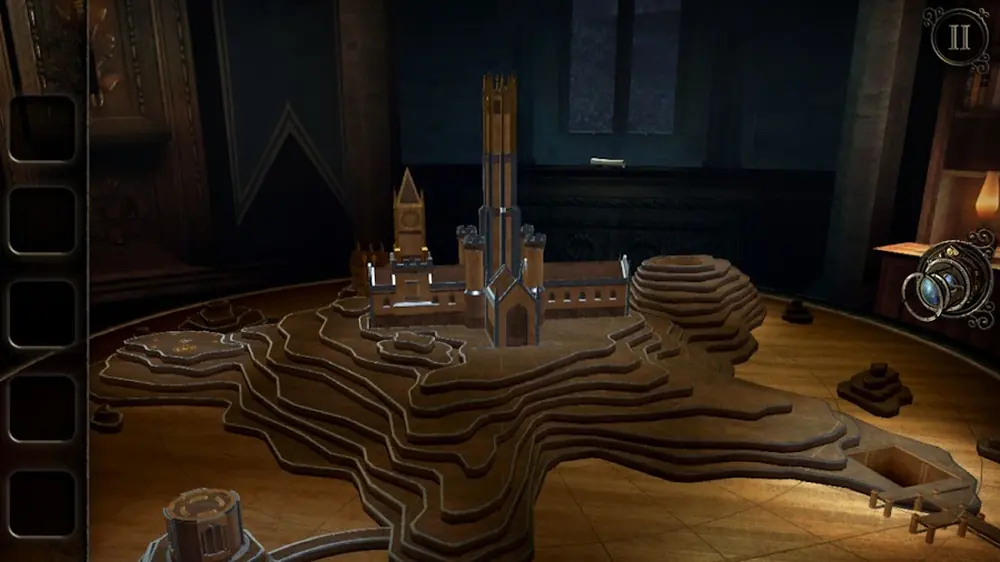
The Room Three — a dim study with an intricate mechanical device on the desk

The Room Three

Our score 4.5 / 5

The most tactile puzzle series on mobile, and the third entry is where it stops being a box of tricks and becomes a place. Lenses reveal hidden layers, drawers open onto rooms, and the whole thing rewards patient looking rather than fast fingers.

The horror is atmospheric rather than graphic — no jump scares, plenty of dread. If you bounce off puzzle games because the logic feels arbitrary, this series is the counter-example: everything is on the object in front of you.

  • 4–6 hours
  • Touch-first
  • Premium

This is a paid title. The current price for your account is shown on the store page.

Limbo — a small silhouetted figure walking through a grey forest

Limbo

Our score 4.4 / 5

A monochrome side-scroller about a boy in a forest, and the reason half the indie games of the past decade look the way they do. Puzzles are physical, deaths are frequent, and the game trusts you to work out what it wants without a word of instruction.

It is grim, and some of the deaths are startling — worth knowing before handing the phone to a child. Controls are simple enough that the touchscreen never becomes the obstacle.

  • 3–4 hours
  • No text
  • Premium

This is a paid title. The current price for your account is shown on the store page.
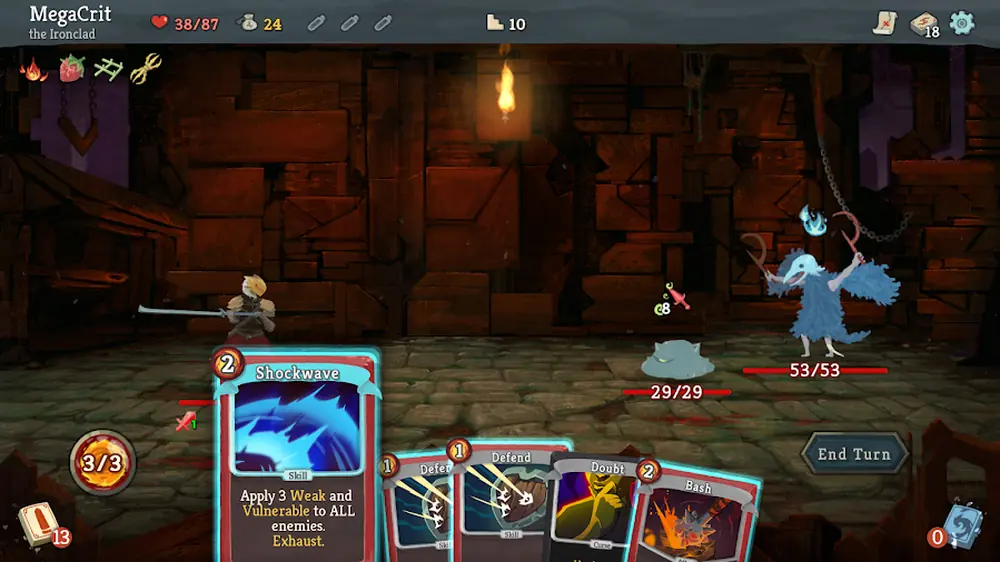
Slay the Spire — a card battle in progress with hand and enemy on screen

Slay the Spire

Our score 4.8 / 5

A card game that behaves like a puzzle: every run deals you a different set of tools and asks you to build something coherent out of them before the floor above kills you. The mobile port is complete, and the interface is better here than on some larger screens.

It is also the one game on this page you will still be playing in a year. Runs take under an hour, defeats explain themselves, and the temptation to start one more is the strongest on this list.

  • 30–60 min per run
  • Endless replay
  • Premium

This is a paid title. The current price for your account is shown on the store page.

Compare

Which one for tonight

Four premium indie titles — length, difficulty and what they ask of you
Game Kind of puzzle Length Difficulty Replay
Monument Valley Spatial illusion About 90 minutes 2 Low — but worth revisiting
The Room Three Mechanical objects 4–6 hours 3 Low — multiple endings
Limbo Physics and timing 3–4 hours 3 Low
Slay the Spire Deck building 30–60 min per run 4 High — different every run

Difficulty is a five-point editorial scale, not a store rating: 1 is a game you can play tired, 5 is one that expects your full attention. Lengths are our own playthroughs and will vary with how long you stare at a puzzle.

Method

How we read a small game

Finish it first

No review is written from a demo or the first chapter. If a game cannot be finished, that fact goes in the review rather than the review being skipped.

Play on the phone people own

Everything here runs on a mid-range Android handset. If a game only works comfortably on new hardware, that belongs in the text.

Judge the ending, not the opening

Short games are easy to love in their first ten minutes. What matters is whether the last chapter earns the first.

Say what it costs in attention

Not money — money is on the store page. Whether the game wants a quiet room, headphones, or half your evening.

Questions

Before you write

Why are all four paid games?

Because the site is about games designed to end rather than to retain you, and that design almost always comes with a price tag. Free titles are welcome here when they fit — they just rarely do.

Do you take review copies?

No. Every game covered here was bought normally, and no publisher sees a page before it is published.

Will you cover iOS versions?

Not yet. All four were played on Android, and writing about a build we have not touched would be guesswork.

Can I send a game?

Send the name and one sentence about what makes it unusual. That sentence is what gets a game onto the list.

[email protected]

Email is the only way to reach the site. There is no contact form here and nothing is collected from you while you read.

Mail is read by Oliver Taylor, usually answered within a couple of working days.